gpa calculator


How to Calculate GPA: The Definitive Guide (With Tools & Expert Strategies)
This guide provides a step-by-step breakdown of GPA calculation, from basic formulas to advanced optimization techniques. Whether you're a high school student preparing for college applications, a college student tracking academic progress, or a parent guiding your child, you'll find precise methods, real-world examples, and actionable insights to:
- Calculate your GPA manually or with verified tools.
- Understand when weighted vs. unweighted GPA matters most.
- Navigate school policies (retakes, pass/fail, withdrawals) strategically.
- Use GPA to qualify for scholarships, honors, or graduate programs.
- Avoid common mistakes that harm academic records.
GPA Fundamentals: What It Measures and Why It Counts
Core Components of GPA
Your Grade Point Average (GPA) quantifies academic performance by averaging grade points across courses. It depends on two variables:
- Grade points: Numerical values assigned to letter grades (e.g., A = 4.0, B = 3.0).
- Credit hours: The weight of each course (e.g., a 4-credit class impacts GPA more than a 1-credit seminar).
The standard formula:
GPA = (Total Grade Points) ÷ (Total Credit Hours)
| Letter Grade | Unweighted Points | Weighted Points (Honors/AP/IB) |
|---|---|---|
| A+ | 4.0 | 4.5–5.0* |
| A | 4.0 | 4.5–5.0* |
| A- | 3.7 | 4.2–4.7* |
| B+ | 3.3 | 3.8–4.3* |
| B | 3.0 | 3.5–4.0* |
| B- | 2.7 | 3.2–3.7* |
| C+ | 2.3 | 2.8–3.3* |
| C | 2.0 | 2.5–3.0* |
| D | 1.0 | 1.0 |
| F | 0.0 | 0.0 |
*Weighted scales vary; confirm with your school. Some cap at 4.5, others allow up to 5.0 for AP/IB.
Where GPA Matters Most
Your GPA influences:
- Academic milestones:
- Dean’s List (typically ≥3.5).
- Academic probation warnings (usually <2.0).
- Scholarship renewals (often require ≥3.0).
- Long-term opportunities:
- College admissions (Ivy League: ≥3.9 unweighted; top publics: ≥3.7).
- Graduate programs (e.g., law/med school: ≥3.5; PhD programs: ≥3.7).
- Entry-level jobs (some employers screen for GPAs, especially in finance/consulting).
Common GPA Misconceptions
Avoid these assumptions:
- "A perfect GPA guarantees success."
- Reality: Admissions and employers prioritize rigor + achievements. A 4.0 with no leadership roles is less competitive than a 3.8 with research publications or internships.
- "Weighted GPA is always more impressive."
- Reality: Colleges often recalculate GPAs on an unweighted 4.0 scale. A 4.3 weighted GPA may convert to a 3.7 unweighted in their system.
- "Retaking a class erases the old grade."
- Reality: Policies vary. Some schools replace the grade (e.g., ASU), while others average both attempts (e.g., certain community colleges).
Step-by-Step GPA Calculation (With Real Examples)
1. Convert Letter Grades to Points
Use your school’s official scale (the table above is a standard reference). Examples:
- A- in a regular class = 3.7 points.
- A- in an AP class = 4.2–4.7 points (weighted).
- B+ in an honors class = 3.8 points (if weighted).
Critical Note: Some schools use non-standard scales (e.g., Princeton: A+ = 4.0; Stanford: A+ = 4.3). Always verify with your registrar.
2. Multiply by Credit Hours
Each course’s impact on your GPA depends on its credit value. Examples:
- B+ (3.3) in a 3-credit course = 3.3 × 3 = 9.9 quality points.
- C (2.0) in a 4-credit course = 2.0 × 4 = 8.0 quality points.
- A (4.0) in a 1-credit lab = 4.0 × 1 = 4.0 quality points.
3. Sum Quality Points and Credits
Add all quality points and divide by total credits to get your GPA.
Example Calculation (Semester GPA):
| Course | Grade | Grade Points | Credits | Quality Points |
|---|---|---|---|---|
| Calculus I (Honors) | B | 3.5 | 4 | 14.0 |
| English 101 | A- | 3.7 | 3 | 11.1 |
| Chemistry Lab | B+ | 3.3 | 1 | 3.3 |
| History Elective | A | 4.0 | 3 | 12.0 |
| Total Quality Points | 40.4 | |||
| Total Credits | 11 | |||
| Semester GPA | 40.4 ÷ 11 = 3.67 | |||
4. Calculate Cumulative GPA
To find your overall GPA across multiple terms:
- Sum the total quality points from all semesters.
- Sum the total credits from all semesters.
- Divide total quality points by total credits.
Example (Two Semesters):
- Semester 1: 3.67 GPA (40.4 points / 11 credits).
- Semester 2: 3.50 GPA (38.5 points / 11 credits).
- Cumulative GPA: (40.4 + 38.5) ÷ (11 + 11) = 78.9 ÷ 22 = 3.59.
Tool Tip: Use a spreadsheet or a GPA calculator to automate multi-semester tracking.
Weighted vs. Unweighted GPA: Key Differences and When Each Matters
Definitions and Practical Implications
- Unweighted GPA:
- Uses a standard 4.0 scale for all courses, regardless of difficulty.
- Example: An A in regular Biology = 4.0; an A in AP Biology = 4.0.
- Weighted GPA:
- Adds extra points for honors/AP/IB courses (e.g., A = 5.0 instead of 4.0).
- Example: An A in AP Biology = 5.0; a B in AP Biology = 4.0.
| Scenario | Unweighted GPA | Weighted GPA |
|---|---|---|
| College admissions | ✅ Preferred (recalculated by schools) | ❌ Often ignored |
| Graduate programs | ✅ Required (e.g., law/med school) | ❌ Not considered |
| High school class rank | ❌ Rarely used | ✅ Standard for rankings |
| Merit scholarships | ❌ May exclude rigor | ✅ Rewards advanced courses |
| NCAA eligibility | ❌ Not used | ✅ Required (with verification) |
How Colleges Handle GPA Recalculation
Admissions officers from top institutions share their approaches:
- Harvard/Yale/Princeton:
- Recalculate all GPAs to an unweighted 4.0 scale, ignoring weighted boosts for AP/IB.
- Focus on core academic subjects (math, science, English, history).
- University of Michigan/UNC/UVA:
- Consider both weighted and unweighted but prioritize grade trends (e.g., improvement over time).
- Community Colleges:
- Use unweighted GPA for transfer admissions; weighted GPA may help with scholarships.
Actionable Advice by Student Type
- High school students:
- Focus on weighted GPA for class rank and local scholarships.
- Assume colleges will use unweighted—aim for ≥3.8 in core classes.
- College students:
- Prioritize unweighted GPA (grad schools and employers care most about this).
- Aim for ≥3.5 to qualify for Latin honors (cum laude/magna/summa).
- Student-athletes:
- Verify your school’s weighted scale with the NCAA Eligibility Center.
- Core course GPA must meet NCAA minimums (e.g., ≥2.3 for Division I).
How School Policies Impact Your GPA
Course Retake Rules
Retaking a class can boost your GPA, but policies vary:
- Grade Replacement (e.g., Arizona State University, University of Florida):
- The new grade replaces the old one in GPA calculations.
- Example: Retaking a "D" (1.0) and earning a "B" (3.0) adds 2.0 points per credit to your GPA.
- Grade Averaging (e.g., some community colleges):
- Both attempts count toward your GPA.
- Example: A "D" (1.0) and a "B" (3.0) average to a "C" (2.0).
- Retake Limits:
- Most schools allow only one retake per course.
- Some exclude retakes from Latin honors calculations.
Pass/Fail and Withdrawal Policies
- Pass/Fail (P/F):
- Does not affect GPA (but may limit credit earnings).
- Best use: Take non-major courses P/F to avoid GPA risk (e.g., a PE class or elective).
- Warning: Overusing P/F can signal lack of rigor to admissions committees.
- Withdrawals (W):
- No GPA impact, but excessive Ws may raise red flags.
- Critical deadline: Withdraw before the drop date to avoid an automatic "F."
Grading Scale Variations by School
Schools use different scales. Below are examples from select universities:
| School | A+ | A | A- | B+ |
|---|---|---|---|---|
| Princeton | 4.0 | 4.0 | 3.7 | 3.3 |
| Stanford | 4.3 | 4.0 | 3.7 | 3.3 |
| MIT | 5.0 | 5.0 | 4.7 | 4.3 |
| University of Texas at Austin | 4.0 | 4.0 | 3.67 | 3.33 |
Key Takeaway: Never assume A+ = 4.3. Check your school’s official catalog for the exact scale.
How to Find Your School’s Policies
- Search your school’s website for:
- "It sounds like you're asking about **your school**—but since I don’t have specific details about your institution, I can provide general information or help with common school-related topics! Let me know what you'd like to explore: ### **Possible Topics About Your School:** 1. **School Profile** - Name, location, type (public/private/international), grades offered. - Mission, vision, or core values. - Notable programs (e.g., STEM, arts, sports, IB/AP). 2. **Academics** - Curriculum (e.g., national, Cambridge, IB, CBSE). - Subjects, electives, or specializations. - Grading system, exams (e.g., SAT, GCSE, board exams). 3. **Extracurriculars** - Clubs (debate, robotics, Model UN), sports teams, or arts programs. - Competitions or achievements (e.g., science fairs, Olympics). 4. **Facilities** - Labs, libraries, sports complexes, or tech resources. - Hostel/day-school options (if applicable). 5. **Admissions** - Application process, fees, scholarships. - Entry requirements (e.g., entrance tests, interviews). 6. **Student Life** - Events (annual day, festivals, exchange programs). - Uniform rules, timings, or student councils. 7. **Alumni & Reputation** - Famous alumni or college placement records. - Rankings or accreditations. 8. **Challenges/Improvements** - Areas where the school excels or could improve. - Student/parent feedback. --- ### **How Can I Help?** - Are you looking for **general advice** (e.g., how to choose a school)? - Do you need help with **homework, projects, or exam prep** related to your school’s curriculum? - Want to **compare your school** to others? - Need **templates** (e.g., leave applications, recommendation letters)? academic catalog"
- "It sounds like you're asking about **your school**—but I’m not sure what specific information you’re looking for! Here are a few ways I can help: ### **1. General Information About Your School** - **Name & Location**: What’s the name of your school? (e.g., "XYZ High School, New York") - **Type**: Is it a public, private, international, or boarding school? - **Grade Levels**: Does it cover elementary, middle, high school, or college? - **Special Features**: Does it have a strong focus (e.g., STEM, arts, sports, IB program)? ### **2. Academic & Extracurricular Details** - **Curriculum**: Does it follow a national curriculum (e.g., CBSE, GCSE, AP) or an international one (IB, Cambridge)? - **Subjects Offered**: What are the key subjects or electives? - **Clubs & Activities**: Are there sports teams, debate clubs, robotics, or music programs? - **Achievements**: Any notable awards, rankings, or alumni success stories? ### **3. Admissions & Requirements** - **Entry Process**: What are the admission criteria (exams, interviews, essays)? - **Fees & Scholarships**: Is it affordable? Are there financial aid options? - **Deadlines**: When do applications open/close? ### **4. Student Life & Facilities** - **Campus**: Does it have modern labs, libraries, sports fields, or dorms? - **Culture**: Is it competitive, collaborative, or arts-focused? - **Diversity**: Is the student body international or local? ### **5. Problems or Improvements** - Are you looking for ways to **improve your school** (e.g., better resources, student engagement)? - Do you need help with **school projects, essays, or presentations**? --- ### **How Can I Help?** Let me know: - **"Tell me about [Your School’s Name]"** (I can try to find info online). - **"How do I choose the right school?"** (I can guide you on factors to consider). - **"Help me write a school essay/application."** - **"What are the best schools in [Your City/Country]?"** GPA policy"
- "It sounds like you're asking about **your school**—but since I don’t have details about your specific school, I can help in a few ways: ### 1. **General School Information** - **Name/Location**: What’s the name of your school? I can help find basic details (e.g., website, address, programs). - **Type**: Is it a public/private school, college, university, or online institution? - **Level**: Elementary, middle, high school, or higher education? ### 2. **Common School Topics** - **Admissions**: Application deadlines, requirements (GPA, tests like SAT/ACT, essays). - **Academics**: Courses, majors, extracurriculars, or special programs (STEM, arts, sports). - **Student Life**: Clubs, housing (if a boarding school/college), events. - ** https://everycalculators.com/ **: Libraries, counseling, career services, or financial aid. - **Reviews/Rankings**: How it compares to other schools (e.g., *U.S. News* rankings for colleges). ### 3. **Specific Questions You Might Have** - *"How do I transfer to [School Name]?"* - *"What’s the dress code at [School Name]?"* - *"Does [School Name] offer AP/IB programs?"* - *"How’s the food/safety/reputation?"* ### 4. **If You’re Asking About a Hypothetical School** Let me know what details you’d like to explore (e.g., "How would a school with X program work?"). --- **How can I help?** Share more details, and I’ll tailor my answer! *(Example: "I go to XYZ High School—how do I join the debate team?")* grading scale"
- Contact your academic advisor for edge cases (e.g., pass/fail deadlines, retake limits).
- For transfers: Ask how external credits will appear on your new transcript (e.g., as grades or just credits).
GPA Calculator Tools: Which One Fits Your Needs?
Essential Features to Look For
A reliable GPA calculator should:
- Support your school’s exact grading scale (e.g., A+ = 4.0 vs. 4.3).
- Allow semester-by-semester tracking with cumulative updates.
- Include "what-if" scenarios (e.g., "What if I get a B in Organic Chem?").
- Handle retakes, pass/fail, and withdrawals correctly.
- Be mobile-friendly for on-the-go updates.
Top Tools Compared (2024)
| Tool | Best For | Pros | Cons |
|---|---|---|---|
| CollegeBoard | High school athletes, NCAA eligibility |
|
|
| GPA Calculator.net | Transfer students, detailed tracking |
|
|
| ASU’s GPA Tool | ASU students (undergrad/grad) |
|
|
| Back2College | Non-traditional students, quarter-system schools |
|
|
| Scholaro | International students |
|
|
Recommendations by User Type
- High school students: Use GPA Calculator.net for weighted GPA and NCAA verification.
- College students: Use your university’s official tool (e.g., ASU students should use ASU’s calculator).
- Transfer students: Opt for a tool with retake simulations (e.g., Back2College).
- International students: Use Scholaro for grade conversions.
Pro Tip: Bookmark your chosen tool and update it after each semester to track progress toward goals (e.g., Dean’s List, scholarships).
Proven Strategies to Improve Your GPA
Quick Wins for Immediate Impact
- Retake low-grade, high-credit courses:
- Prioritize classes with the most credits (e.g., retaking a 4-credit "C" to a "B" adds 4.0 quality points).
- Example: Improving from a C (2.0) to a B (3.0) in a 4-credit course = +4.0 points.
- Use pass/fail strategically:
- Take non-major courses pass/fail to avoid GPA risk (but check limits—some schools cap P/F credits at 12–16 total).
- Withdraw before deadlines:
- If failing a class, withdraw before the drop date to avoid an "F" (a "W" has no GPA impact).
Long-Term Habits for Sustained Success
- Evidence-based study techniques:
- Spaced repetition (e.g., Anki flashcards) improves retention by 30–50% over cramming.
- Active recall (self-quizzing) is more effective than passive rereading.
- Balanced course selection:
- Mix challenging and "GPA booster" classes (e.g., 2 hard courses + 2 easier ones per semester).
- Avoid overloading on high-credit/high-difficulty courses in one term.
- Leverage professor relationships:
- Attend office hours. Professors often offer extra credit or rounding bumps to engaged students.
Mistakes to Avoid
- Withdrawing too late: Results in an "F" instead of a "W."
- Ignoring pass/fail options for non-major classes.
- Assuming all schools recalculate GPA the same way. Always verify!
- Neglecting trends: A rising GPA (e.g., 3.2 → 3.8) impresses admissions more than a static 3.5.
Case Study: Raising a 2.8 to 3.5 in Two Semesters
Scenario: A college sophomore with a 2.8 GPA needed a 3.5+ for a scholarship.
Strategy:
- Retook a 4-credit "C" (2.0) and earned a "B+" (3.3) → +5.2 quality points.
- Took two "easier" 3-credit courses (A- and A) → +13.4 quality points.
- Avoided withdrawals and pass/fail to maximize GPA impact.
Result: GPA rose to 3.51, securing the scholarship.
GPA and College Admissions: What You Need to Know
GPA Benchmarks for Top Schools (2024 Data)
| School Tier | Unweighted GPA Range | Weighted GPA Range | Key Notes |
|---|---|---|---|
| Ivy League (Harvard, Princeton, Yale) | 3.9–4.0 | 4.3–4.6 | 95%+ of admitted students have ≥3.8 unweighted. |
| Top 20 Public (UVA, Michigan, UNC, UCLA) | 3.7–3.9 | 4.0–4.3 | Middle 50% range: 3.7–3.9. |
| Top 20 Private (USC, NYU, Notre Dame) | 3.7–3.9 | 4.1–4.4 | Test-optional schools may weigh GPA more heavily. |
| State Flagships (Ohio State, UF, UT Austin) | 3.4–3.7 | 3.7–4.0 | Auto-admit thresholds often ≥3.5 (e.g., UT Austin: top 6%). |
| Safety Schools (Regional publics/community colleges) | 3.0–3.4 | 3.3–3.8 | Minimum for merit aid is often ≥3.0. |
How Admissions Offices Recalculate GPA
Most colleges don’t use your transcript’s GPA directly. Instead, they:
- Convert all grades to an unweighted 4.0 scale (ignoring weighted boosts).
- Exclude non-academic courses (e.g., PE, some electives).
- Focus on core subjects (math, science, English, history, foreign language).
- Evaluate trends: An upward trajectory (e.g., 3.2 → 3.8) is more impressive than a flat 3.5.
Expert Insights: What Admissions Officers Look For
Q: Does a 4.0 guarantee admission to top schools?
A: "No. We look at the whole picture—rigor of courses, essays, recommendations, and extracurriculars. A student with a 3.8 who took 5 AP classes and led a club is more competitive than a 4.0 student with no challenges." —Admissions Officer, University of Michigan
Q: How do you view grade trends?
A: "A student who starts with a 3.2 and ends with a 3.9 shows resilience and growth. We’d rather see that than a 3.9 that drops to a 3.6 senior year." —Admissions Consultant, IvyWise
Q: Do you prefer weighted or unweighted GPA?
A: "We recalculate everyone’s GPA on our own unweighted scale. A 4.3 weighted GPA might become a 3.7 unweighted, which is less competitive than a consistent 3.9 unweighted." —Former Admissions Officer, Harvard
Actionable Tips for College Applications
- If your GPA is below a school’s average:
- Highlight upward trends in your personal statement.
- Emphasize rigor (e.g., "I took 4 AP classes despite a 3.6 GPA").
- Submit strong test scores (if the school considers them).
- If your GPA is strong but not exceptional:
- Focus on essays, extracurriculars, and letters of recommendation.
- Apply to schools where your GPA is above the middle 50% range.
- For grad school:
- Aim for ≥3.5 (3.7+ for top programs).
- Some programs (e.g., MBA) prioritize work experience over GPA.
Common GPA Myths Debunked
Myth 1: "A 4.0 Guarantees Ivy League Admission"
Reality:
- Top schools use holistic review. A 4.0 with no extracurriculars or weak essays is often rejected.
- Example: Harvard’s 2023 acceptance rate was <5%, even for valedictorians.< li>
- What matters more: Rigor (AP/IB courses), leadership, and personal achievements.
Myth 2: "Weighted GPA Is Always Better"
Reality:
- Colleges recalculate GPAs on their own unweighted scales.
- Example: A 4.3 weighted GPA might convert to a 3.7 unweighted, which is less competitive than a 3.9 unweighted.
- Exception: Weighted GPA helps with high school class rank and some merit scholarships.
Myth 3: "Retaking a Class Erases the Old Grade"
Reality:
- Policies vary by school:
- Grade replacement (e.g., ASU, UF): New grade replaces the old one.
- Grade averaging (e.g., some community colleges): Both attempts count.
- Always confirm with your registrar before retaking a course.
Myth 4: "Pass/Fail Classes Don’t Affect GPA"
Reality:
- While they don’t lower your GPA, overusing P/F can:
- Signal lack of rigor to admissions committees.
- Disqualify you from Latin honors (e.g., cum laude) if too many credits are P/F.
- Best practice: Limit P/F to non-major electives.
Myth 5: "GPA Is the Only Thing That Matters"
Reality:
- For jobs and grad school, experience often trumps GPA:
- A 3.5 GPA with 2 published research papers is stronger than a 3.9 with no experience.
- Many tech companies (e.g., Google, Apple) no longer ask for GPAs on applications.
- Where GPA still matters:
- Academic scholarships (often require ≥3.0–3.5).
- Graduate school admissions (especially for PhD programs).
- Certain industries (e.g., finance, consulting, law).
GPA for Special Cases: Transfers, Athletes, and International Students
Transfer Students
Key rules when changing schools:
- GPA Reset:
- Most 4-year universities recalculate your GPA using their scale. Your community college GPA won’t transfer.
- Credit Transfer ≠ GPA Transfer:
- You’ll receive credit for classes (e.g., "Calculus I = 4 credits"), but the grade won’t affect your new GPA.
- Strategy for Transfers:
- Focus on earning high grades in your first semester at the new school to establish a strong GPA.
- Use a GPA calculator to simulate how future semesters will impact your cumulative GPA.
NCAA Athletes
Eligibility requirements:
- Core Course GPA:
- ≥2.3 in 16 core courses (for Division I).
- ≥2.2 for Division II.
- Weighted Grade Verification:
- Your school must submit proof of weighted grades (e.g., AP/IB boosts).
- Sliding Scale:
- Higher test scores can offset a lower GPA (e.g., 2.3 GPA + 900 SAT for Division I).
Pro Tip: Use the NCAA Eligibility Center to verify your courses count as "core."
International Students
Converting percentage grades to a 4.0 scale:
| Country | Local Grade | U.S. Equivalent | GPA |
|---|---|---|---|
| India | 90%+ | A | 4.0 |
| India | 80–89% | A- | 3.7 |
| UK | 70%+ (First Class) | A | 4.0 |
| China | 90–100% | A | 4.0 |
| Germany | 1.0–1.5 | A | 4.0 |
| Canada | 90%+ | A+ | 4.0 |
Key Steps for International Students:
- Get an official credential evaluation (e.g., from WES, ECE, or SpanTran).
- Check if your target school has country-specific conversion tables.
- Explain grading differences in your application (e.g., "In India, 90% is exceptional, equivalent to a U.S. A+").
GPA Calculator Tools and Templates
Recommended Tools by Use Case
- High school students: GPA Calculator.net (supports weighted GPA and NCAA rules).
- College students: Use your university’s official calculator (e.g., ASU’s tool).
- Transfer students: Back2College (handles credit transfers and retakes).
- International students: Scholaro (converts global grades to U.S. GPA).
- DIY option: Download this Google Sheets template for manual tracking.
How to Use a GPA Calculator Effectively
- Input all courses, including retakes, pass/fail, and withdrawals.
- Double-check credit hours (e.g., labs = 1 credit; lectures = 3–4).
- Update after each semester to monitor trends.
- Use the "what-if" feature to plan future semesters (e.g., "What if I get a B in Organic Chem?").
Final Verdict: Best Practices for GPA Success
For Most Students
- Use a school-specific GPA calculator (e.g., your university’s tool or GPA Calculator.net).
- Focus on unweighted GPA for college/grad school applications, but track weighted GPA for high school awards.
- Retake one low-grade, high-credit course per year if needed (e.g., a "C" in a 4-credit class).
- Balance course difficulty: Mix challenging and "GPA booster" classes each semester.
For High School Students
- Prioritize weighted GPA for class rank and local scholarships.
- Take 1–2 AP/IB courses per year to boost rigor without overloading.
- Use the NCAA Eligibility Center to verify core courses if you’re an athlete.
For College Students
- Monitor unweighted GPA—it’s what matters for grad school and jobs.
- Aim for ≥3.5 to qualify for Latin honors (cum laude/magna/summa).
- Use pass/fail strategically for non-major courses (but don’t overdo it).
Key Caveats
- GPA isn’t everything—balance it with extracurriculars, internships, and well-being.
- Always verify your school’s policies (e.g., retake limits, pass/fail deadlines).
- Trends matter more than absolute numbers (e.g., 3.2 → 3.8 is better than a flat 3.5).
Summary
Your GPA is a critical metric for academic and professional opportunities, but it’s not just a number—it reflects your effort, strategy, and resilience. This guide covered:
- How to calculate GPA: Manual methods, tools, and real-world examples.
- Weighted vs. unweighted GPA: When each matters and how colleges recalculate them.
- School policies: Retakes, pass/fail, withdrawals, and grading scales.
- Improvement strategies: Short-term fixes and long-term habits.
- Special cases: Transfers, athletes, and international students.
Next Steps:
- Bookmark a GPA calculator and update it after each semester.
- Check your school’s grading policies (retakes, pass/fail, withdrawals).
- Use the strategies in this guide to improve your GPA strategically.
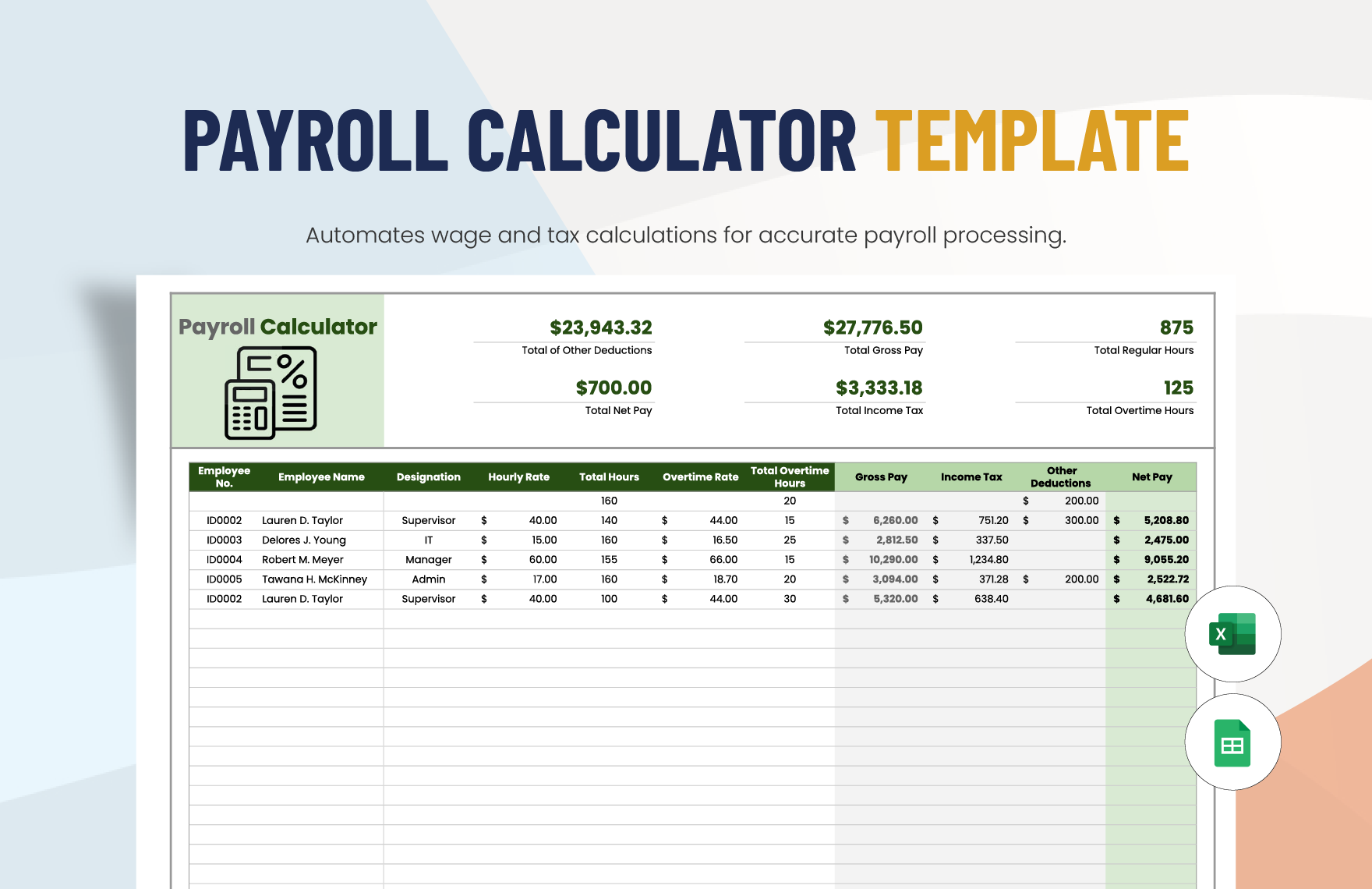
- Download the GPA tracking template to stay organized.
Remember: A strong GPA is built over time. Focus on consistent effort, smart course selection, and leveraging your school’s rules to your advantage.
FAQ
How do I calculate my GPA if my school uses a non-standard scale (e.g., A+ = 4.3)?
Use your school’s official scale in the GPA formula. For example, if A+ = 4.3 at your school:
- Multiply 4.3 by the course’s credit hours.
- Repeat for all courses, then divide total quality points by total credits.For tools, use GPA Calculator.net (supports custom scales).
Does retaking a class replace the old grade or average both?
It depends on your school:
- Grade replacement (e.g., ASU, UF): The new grade replaces the old one.
- Grade averaging (e.g., some community colleges): Both grades count.Action step: Check your school’s academic catalog or ask your advisor.
Do colleges look at weighted or unweighted GPA?
Most colleges recalculate your GPA on an unweighted 4.0 scale, ignoring weighted boosts for AP/IB. However:
- Weighted GPA matters for high school class rank and some merit scholarships.
- Always aim for a strong unweighted GPA (≥3.7 for top schools).
How can I improve my GPA quickly?
Focus on:
- Retaking high-credit, low-grade courses (e.g., a 4-credit "C" → "B" adds 4.0 points).
- Using pass/fail for non-major electives (if allowed).
- Withdrawing from failing classes before the deadline to avoid an "F."
- Taking "GPA booster" courses (easier classes in your strong subjects).Long-term: Use spaced repetition and active recall for better grades.
Does my GPA transfer when I change schools?
No. When you transfer:
- Your credits transfer (e.g., "Calculus I = 4 credits").
- Your GPA does not. The new school recalculates it using their scale.
- Strategy: Earn high grades in your first semester at the new school to establish a strong GPA.
How do I convert international grades to a U.S. GPA?
Use a credential evaluation service (e.g., WES, ECE) or a tool like Scholaro. Example conversions:
- India: 90%+ = A (4.0), 80–89% = A- (3.7).
- UK: 70%+ (First Class) = A (4.0).
- China: 90–100% = A (4.0).Pro tip: Explain grading differences in your application (e.g., "In Germany, 1.0 is the highest grade, equivalent to a U.S. A+").
What GPA do I need for Ivy League schools?
For Ivy League (Harvard, Yale, Princeton):
- Unweighted GPA: 3.9–4.0 (95%+ of admitted students have ≥3.8).
- Weighted GPA: 4.3–4.6 (but colleges recalculate to unweighted).
- Context matters: A 3.8 with rigorous courses (5+ AP/IB) is competitive; a 4.0 with easy courses is not.
Can I still get into a good college with a low GPA?
Yes, if you:
- Show an upward trend (e.g., 3.2 → 3.8).
- Highlight rigor (e.g., "I took 4 AP classes despite a 3.6 GPA").
- Excel in other areas (test scores, essays, extracurriculars).
- Apply to schools where your GPA is above their middle 50% range.Example: A 3.4 GPA with strong essays and leadership can compete at many state flagships (e.g., Ohio State, UF).